
Global Without Leaving? What Virtual Exchange Can and Cannot Replace
The evidence on study abroad, virtual exchange and learning at home, and a test for choosing between them
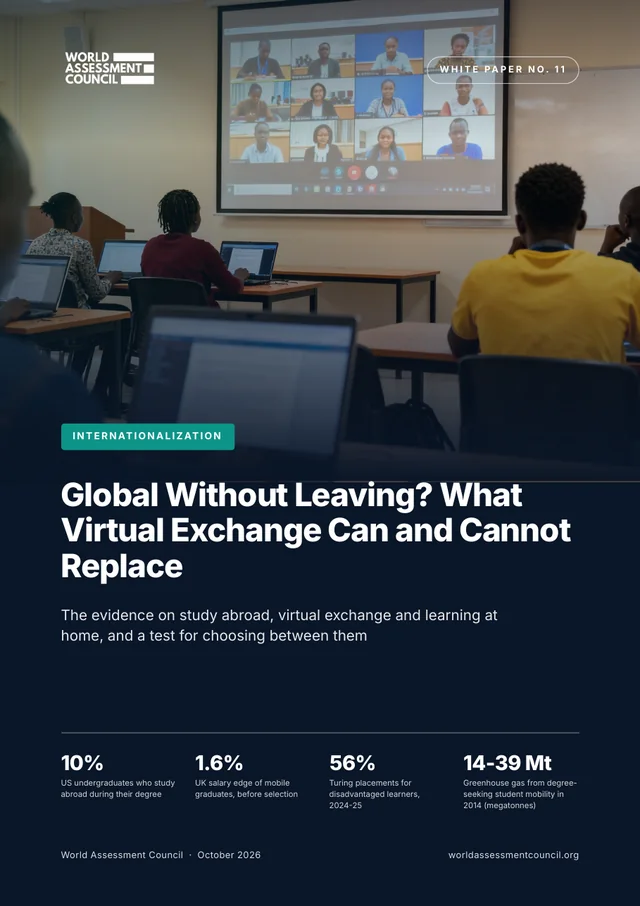
Only about one in ten US undergraduates, and fewer UK students, study abroad, and those who go differ from those who stay. This paper reviews evidence on what physical mobility adds to learning, intercultural competence and careers, and on virtual exchange, internationalized curricula and short blended mobility. It finds that design matters more than distance, and offers the BORDER Test for deciding when the border counts.
Key findings
- Only about 10 percent of US undergraduates study abroad during their degree, and just 2.4 percent of those who go stay a full academic year.
- UK outbound mobility fell from 8.8 percent of graduating students in 2018-19 to 3.5 percent in 2021-22, and mature students went at 3.0 percent against a 7.2 percent five-year average.
- Students abroad in the Georgetown Consortium Project gained 2.33 points on the Intercultural Development Inventory against -0.07 for home controls, with significant gains only in 13 to 18 week programs.
- Once selection is addressed, employment effects can be small: matched UK graduates who studied abroad had a 1.4 percentage point higher employment probability three years out.
The paper has 2 more findings, the full evidence review and the framework.
A chart from the paper
How long US study-abroad students stayed, 2023/24
Share of US students studying abroad for credit
What is inside
- Executive summary and key findings
- Why this question matters now
- What physical study abroad delivers, and to whom
- What the alternatives deliver
- Where the evidence is weak or contested
- A practical framework: the BORDER Test
- Case snapshots
- What to measure
- Risks and open questions
- Recommendations for universities, educators, edtech leaders and policymakers
- Methodology, limits and 31 references
One recommendation for each audience
For university leaders
Make credit-bearing global learning at home, such as an embedded COIL module, a graduation expectation for every student, and report it separately from physical mobility.
For educators
Design virtual exchanges around a graded joint task with real collaboration hurdles and trained facilitation, and run them longer than four to six weeks where possible.
For edtech leaders
Provide partner-matching, scheduling and assessment tools that make COIL easy for ordinary course teams, not only enthusiasts.
For policymakers
Fund virtual and blended exchange as a way into mobility, with its own budget line, not as a cheaper substitute that draws on mobility budgets.
This is a desk-research synthesis, not original fieldwork. We searched official statistics (Open Doors, HESA via Universities UK International, UK government and European Commission data), peer-reviewed studies, working papers, program evaluations and higher education journalism published up to October 2026. Studies that addressed selection or used comparison groups were preferred, and design limits are stated. Every figure was checked against the source page. The paper does not evaluate individual programs or vendors and does not cover inbound student flows, which Paper No. 4 addressed. The cover picture is an AI-generated illustration. Send a correction · Research Standards
More white papers
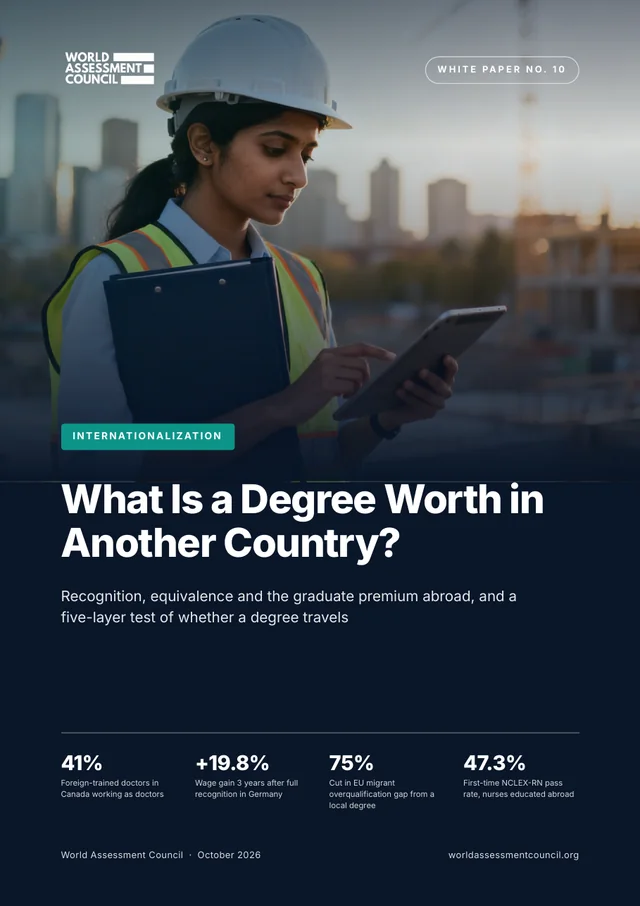
What Is a Degree Worth in Another Country?
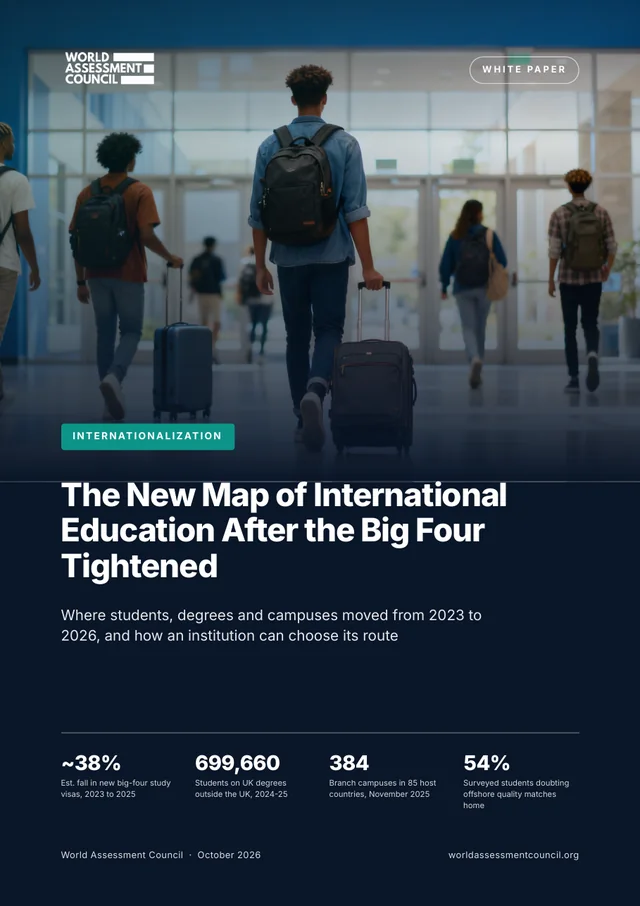
The New Map of International Education After the Big Four Tightened
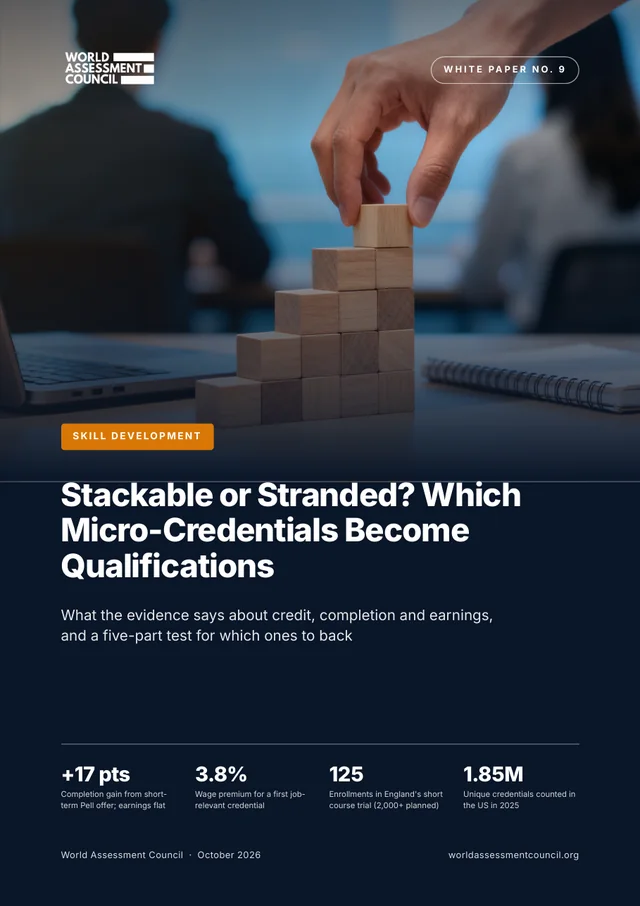
Stackable or Stranded? Which Micro-Credentials Become Qualifications
From the same centre
See what the Centre for Internationalization works on, with its analysis and the news in its field.